Valerio Bucci, Teatro Verde - Malalingua Teatro, Theatre Educator / Actor / Director (Method learned from Gianluigi Capone, theatre practitioner, "Danza il tuo clown" workshop)
Indoor / outdoor / any open space large enough for participants to move freely
Group size
8 – 30 participants
Objective
This method helps a newly formed group learn each other's names in a playful, low-pressure way while simultaneously building awareness of collective responsibility. It establishes from the very first session one of the foundational principles of collaborative work: every individual's attention and care directly affects the success of the whole group.
When to use it
At the very beginning of a Collective Action Project, during the group-forming stage. It works best as a first or second session activity, before the group has established strong internal dynamics, and is especially effective when participants do not yet know each other.
Step-by-step guide
1) Form a circle. Ask participants to stand in a circle. If the group is meeting for the first time, run a quick name round: each person says their name loudly, and the whole group repeats it together ("Say – Repeat"). This ensures everyone starts with at least a basic familiarity with the names in the room.
2) Explain the rules. Before starting, explain clearly:
- Everyone will walk freely inside the circle.
- When you cross paths with someone, you must shake their hand — you cannot choose who: the first person you meet is the one you greet.
- As you shake hands, each person clearly states their current name.
- After the handshake, you swap names: from that moment on, you introduce yourself with the other person's name, and they introduce themselves with yours.
- If, by chance, you happen to receive your own original name back, you step out of the circle — you are "free."
- The group wins collectively if everyone eventually exits the circle.
3) Start the game. Give a clear signal and let participants move freely within the space. Encourage them to keep moving, not to cluster, and to speak their name clearly at each exchange.
4) Monitor for errors. Watch for situations that reveal a mistake has occurred: the same name appearing twice simultaneously, or a name circulating among people who have already exited. If an implausible scenario arises, calmly stop the game and start a new attempt — without identifying who made the mistake.
5) Play multiple rounds if needed. It is normal — and expected — that the group does not succeed on the first attempt. Each new attempt is a fresh start. In practice, it is very rare for a group to win on the first try.
6) Debrief. After the game (whether won or not), gather the group in a circle and reflect briefly:
- What made the game difficult?
- What happened when someone lost concentration?
- Did one small mistake affect everyone?
- What would have been needed to succeed together?
Materials needed
No specific materials required.
Tips for facilitators
Keep the energy light. The game works precisely because it is playful. Avoid turning the debrief into a blame session — the point is never to identify who made the mistake, but to feel collectively how fragile shared success can be.
Speak clearly, move slowly at first. Encourage participants to state their name loudly and clearly at each exchange. Mumbling is the most common source of errors.
Watch for exclusion dynamics. In heterogeneous groups, some participants may be avoided (consciously or not). Gently remind the group that the rule is to approach the first person you cross, not the one you choose.
Use failed rounds as material. A failed attempt is not a failure — it is the most useful moment. The debrief after a broken round often generates richer reflection than a successful one.
Works with adults too. Despite its apparent simplicity, this game functions very well with adult groups and mixed-age groups. Do not underestimate it with older participants.
Possible variations
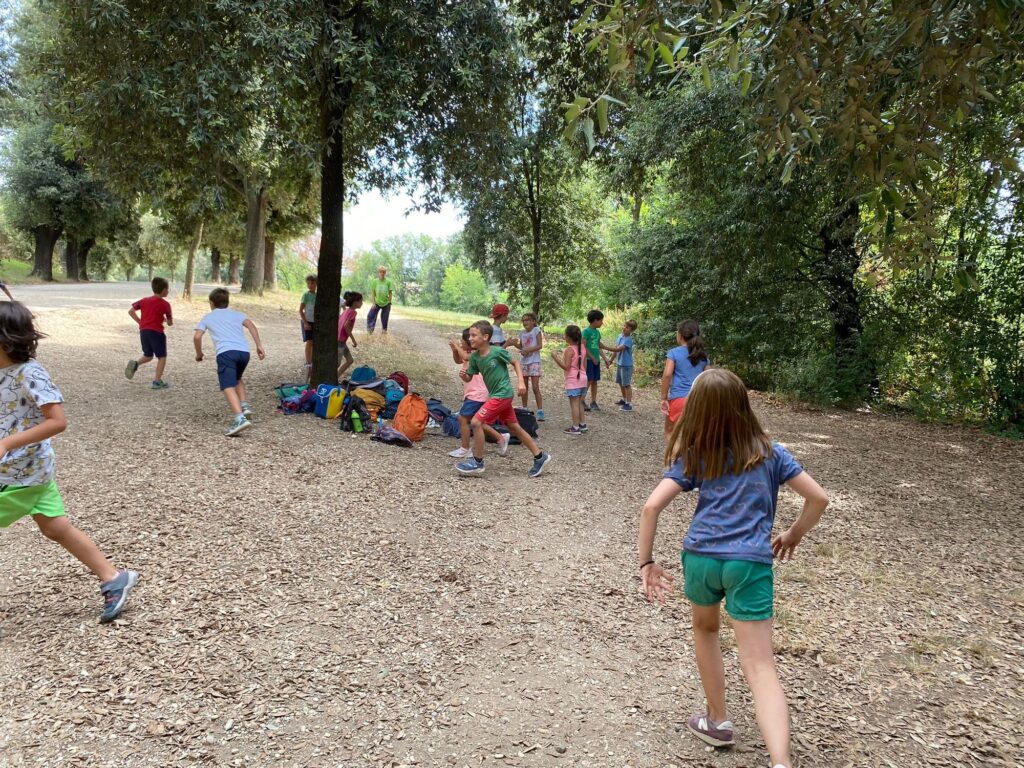
With very young children (ages 4–7): Simplify by removing the "exit" rule. Play purely as a name-exchange game without the winning condition, focusing only on the movement and the meeting.
Adding a physical gesture: Each participant invents a gesture to accompany their name. The gesture travels with the name and must be reproduced at each exchange — this adds a further memory layer and makes individual contributions more visible.
Multilingual groups: Participants can introduce themselves with both their name and a word in their own language. The word travels with the name, opening a small window into each person's background.
Outdoor / large space version: Expand the playing area to increase the challenge and the physical engagement.
Reflection extension: After the debrief, ask participants to draw or write one sentence about what their experience of "carrying someone else's name" felt like — useful as a narrative starting point for a storytelling or identity-based project.