This methodology is quite flexible; as it does not prescribe specific outcomes but instead supports the artists’ creative process, it can last anywhere from two hours to three sessions of eight hours each, depending on the complexity of the project.
Where can it be used
Activities can take place either indoors or outdoors, preferably in a non-formal learning space or an unstructured public space that encourages group collaboration. It is important that any chairs and/or tables are arranged in a circle or in clusters. Furthermore, it is important that there is a larger open space where groups can present their work. The mentor moves between the groups and, as a good listener, provides effective feedback.
Group size
The most effective way to apply the PBL methodology is to work in small groups (3–5 people) to foster positive interdependence, individual and group responsibility, collaboration, the development of social skills, and self-assessment of the process. The mentor may also decide whether to assign roles to participants or let them decide for themselves (e.g. timekeeper, researcher, creative, storyteller etc.) depending on the type of problem posed and the objectives of the activity. (References to cooperative learning methodology.)
Objective
PBL is a student-centered pedagogical approach and is based on learning through the resolution of real or realistic problems. Students work on complex, often multidisciplinary scenarios that encourage them to actively seek out information (active learning), develop critical thinking skills and an entrepreneurial mindset. The learning process takes place in a group setting, where participants learn to communicate, negotiate and share ideas in order to find effective solutions.
The mentor acts as a facilitator, helping students to ask themselves questions and reflect on the learning process (self-awareness).
https://youtu.be/DTvaJlcVjNw?si=j266qcCr4irAD3t2
When to use it
This methodology is well suited to supporting various stages of a Collective Action Project, such as the analysis, design and implementation of a creative initiative.
Furthermore, it is a valuable tool at every stage: students give, receive and apply feedback to improve the process and the outcomes, and to ensure continuous improvement in their professional development.
Step-by-step guide
1. Presentation of the problem. A meaningful case study or complex situation is presented for analysis. Students understand the scenario and the main question;
E.g. How can we transform a public space in our neighbourhood through an artistic intervention?
How can we represent different identities and perspectives in one shared project?
2. Analysis and identification of learning needs. Students discuss what they already know and what they still need to learn in order to tackle the problem through brainstorming;
3. Information gathering. Each student or group searches for data, sources and materials that will help them better understand the problem in a collaborative way;
4. Development of solutions. Through discussion and reasoning, the group proposes possible solutions, weighing up their advantages and disadvantages;
5. Sharing and reflection. Students present their conclusions and reflect on the learning process.
Materials needed
A PPT presenting the question or challenging situation, in which the mentor sets out the session’s objectives, the working methods and the basic ground rules (e.g. safe space, non-judgemental attitude, active listening, respect for diversity, etc.);
Paper, markers, post it and posters to help bring design ideas to life;
Optional, but useful for experienced mentors:
Follow or create rubrics for planning and evaluating activities, which enable the production of a high-quality proposal, monitoring learning throughout the creative process, and provision of structured feedback for continuous improvement. To assess the skills and abilities acquired, the mentor can create checklists based on the objectives set out in the rubric.
(References to authentic assessment of learning.)
Here is an example of a rubric:
https://my.pblworks.org/system/files/documents/Project%20Design%20Rubric%20-%202022.pdf
Digital devices
Tips for facilitators
It is important that the mentor acts as a facilitator of the process, setting and sharing clear objectives with the participants, observing and intervening in interpersonal dynamics only if the participants don’t respect any of the previously established rules of interaction. Their creative input is limited to asking questions and providing stimuli that guide the group to get the most out of the experience and encourages everyone to share their own wealth of expertise, whilst respecting different cognitive styles (if known).
As facilitator is very important to keep an open and flexible mindset, and to remember to foster and respect a non-formal learning environment.
Taking breaks is all part of the process. Providing a light snack is always appreciated and helps to build connections.
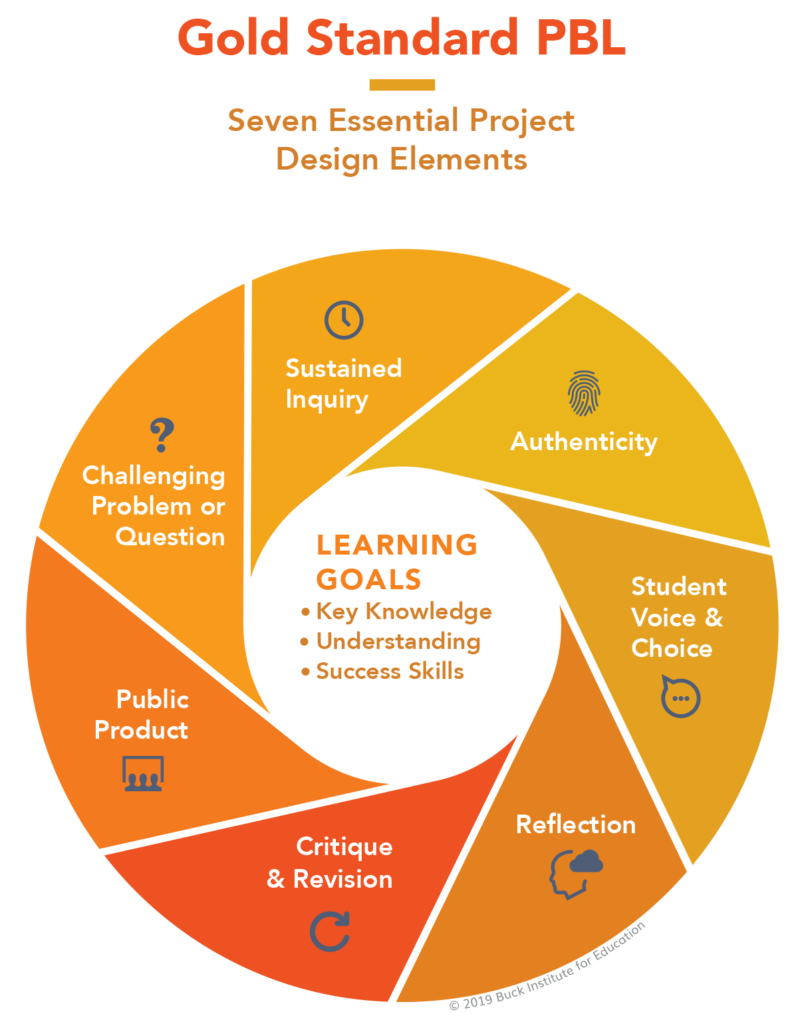
Remember to respect student voice and choice: students make decisions about the project, including how they work and what they create, and express their own ideas in their own voice.
Possible variations
This method can be adapted to different groups and contexts by adjusting the complexity of the problem, the level of guidance provided by the mentor, and the expected outcomes.
With younger or less experienced participants, the mentor can provide more structure, clearer instructions, and predefined roles. With more experienced groups, participants can take greater responsibility in defining the problem and managing the process.
It can also be adapted to different contexts by using locally relevant issues, community-based challenges, or themes connected to participants’ interests.
The duration and format can vary (short sessions, workshops, or longer projects), and activities can be carried out in classrooms, community spaces, or outdoor environments.